

Lambskin vs Cowhide vs Suede: The Complete Leather Comparison Guide
Leather vs Leather: The Complete Comparison Guide for Women's Jackets
Lambskin vs cowhide. Suede vs smooth. Leather jacket vs leather coat. Every comparison you need before buying.
Not all leather is the same. Not even close. The difference between lambskin and cowhide is not just a matter of price, it is a difference in feel, durability, care requirements, and how the piece ages over years of wear. The difference between a leather jacket and a leather coat is not just length, it is a difference in occasion, warmth, silhouette, and the role the piece plays in your wardrobe. This guide answers every leather comparison question in one place.
Each section below takes two leather options, breaks them down honestly across the factors that actually matter, and gives you a clear recommendation based on how most women wear and live in leather. No hedging. No marketing language. Just the information you need to make the right decision.
Lambskin vs Cowhide: Which Leather is Better for a Jacket?
The Luxury Option
Lambskin is the softest leather available in women's outerwear. It is lightweight, drapes against the body beautifully, and has a silky, almost buttery texture that no other hide can match. A lambskin biker jacket feels entirely different to wear from the moment you put it on.
The softness comes at a cost. Lambskin is more vulnerable to scratches, abrasion, and punctures than cowhide. It requires more frequent conditioning and more careful storage. It is not the right choice for a jacket that will be treated roughly or worn in demanding outdoor conditions.
For fashion outerwear, a jacket worn to work, to dinner, on weekends, lambskin is outstanding. The feel justifies every additional moment of care.
The Hardwearing Option
Cowhide is thicker, heavier, and significantly more resistant to abrasion and weather than lambskin. It holds its structure exceptionally well across years of wear, making it the better choice for bomber jackets, trench coats, and any style that needs to maintain a defined silhouette.
Nappa is a refined, softened form of cowhide that sits between standard cowhide and lambskin in terms of feel. It retains the durability of cowhide while offering a noticeably softer hand. Most premium women's leather jackets use nappa for exactly this reason.
Cowhide and nappa are also more resistant to moisture and weather, a practical advantage for a jacket worn as outdoor outerwear rather than purely as fashion.
For a first leather jacket worn primarily as fashion outerwear, choose lambskin or nappa. For a jacket that needs to withstand heavy outdoor use or hold a rigid structure across years of wear, choose cowhide. Both are excellent. The right choice depends entirely on how and where you wear it.
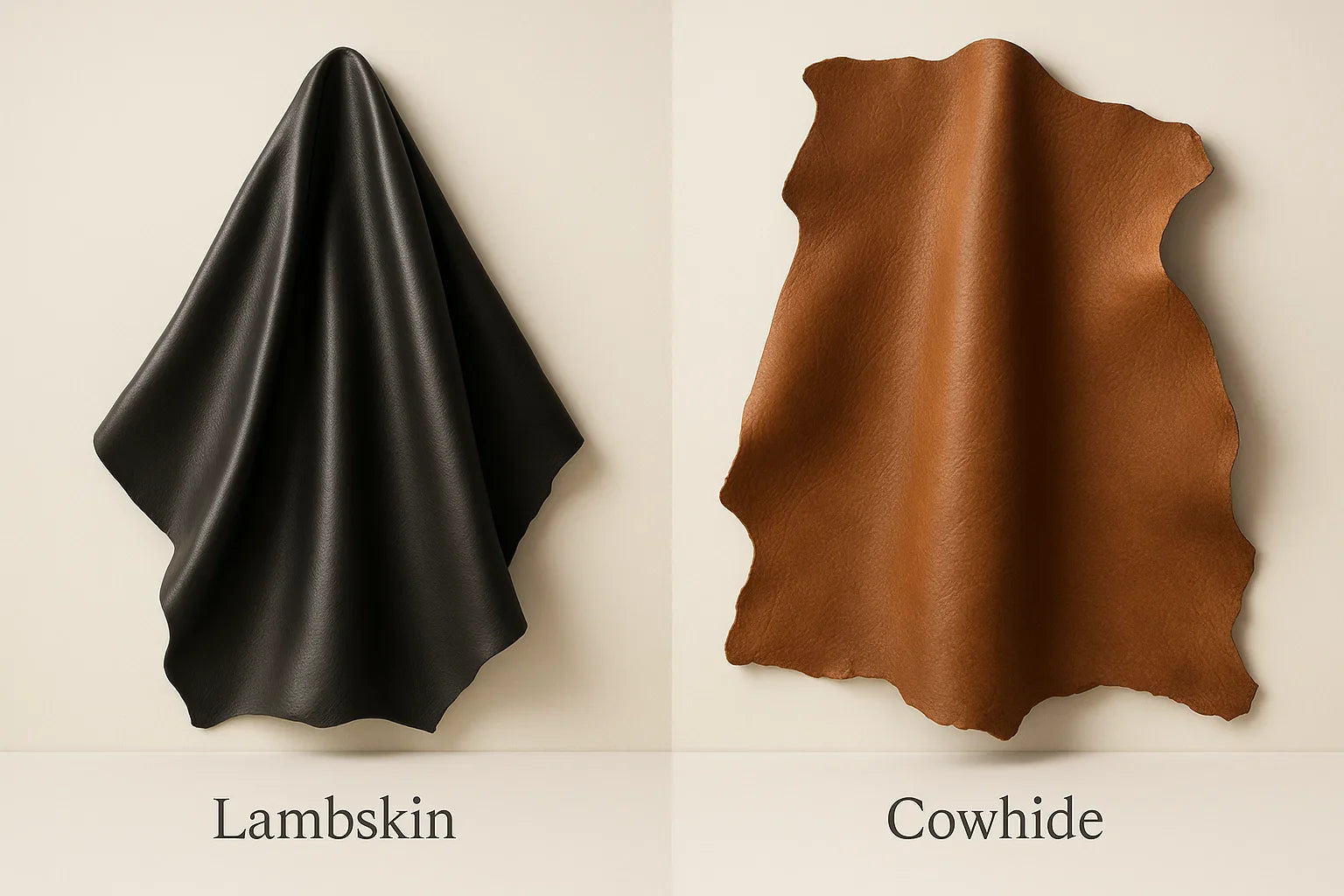
Lambskin and cowhide each offer distinct textures, weights, and characteristics. The right choice depends on how and where you intend to wear the jacket.
Suede vs Smooth Leather: Which Should You Buy First?
The Versatile Foundation
Smooth leather is more versatile, more durable, and easier to care for than suede. It pairs with a wider range of outfits and works in more weather conditions. A smooth leather jacket integrates into your existing wardrobe more readily than a suede piece and requires less careful handling day-to-day.
Smooth leather also ages in a more dramatic, visible way, developing a rich patina that deepens the colour and adds character over years of wear. This is one of the most compelling reasons to invest in quality smooth leather.
The Textured Statement
Suede offers a warmth and texture that smooth leather cannot replicate. In tan, camel, or dusty rose, a suede jacket creates a softness in an outfit that is distinctly different to the sharpness of smooth leather. It is particularly effective in autumn and winter palettes built around warm, earthy tones.
The trade-off is practicality. Suede is more absorbent than smooth leather and more vulnerable to water and staining. It requires waterproofing spray before first wear and more careful attention to storage and cleaning. It is a genuinely excellent material, but it rewards attentive ownership.
Buy smooth leather first. Once you have a reliable smooth leather jacket in your wardrobe, suede is the ideal second leather investment. The two materials complement rather than duplicate each other, and a wardrobe that contains both covers every leather occasion effectively.
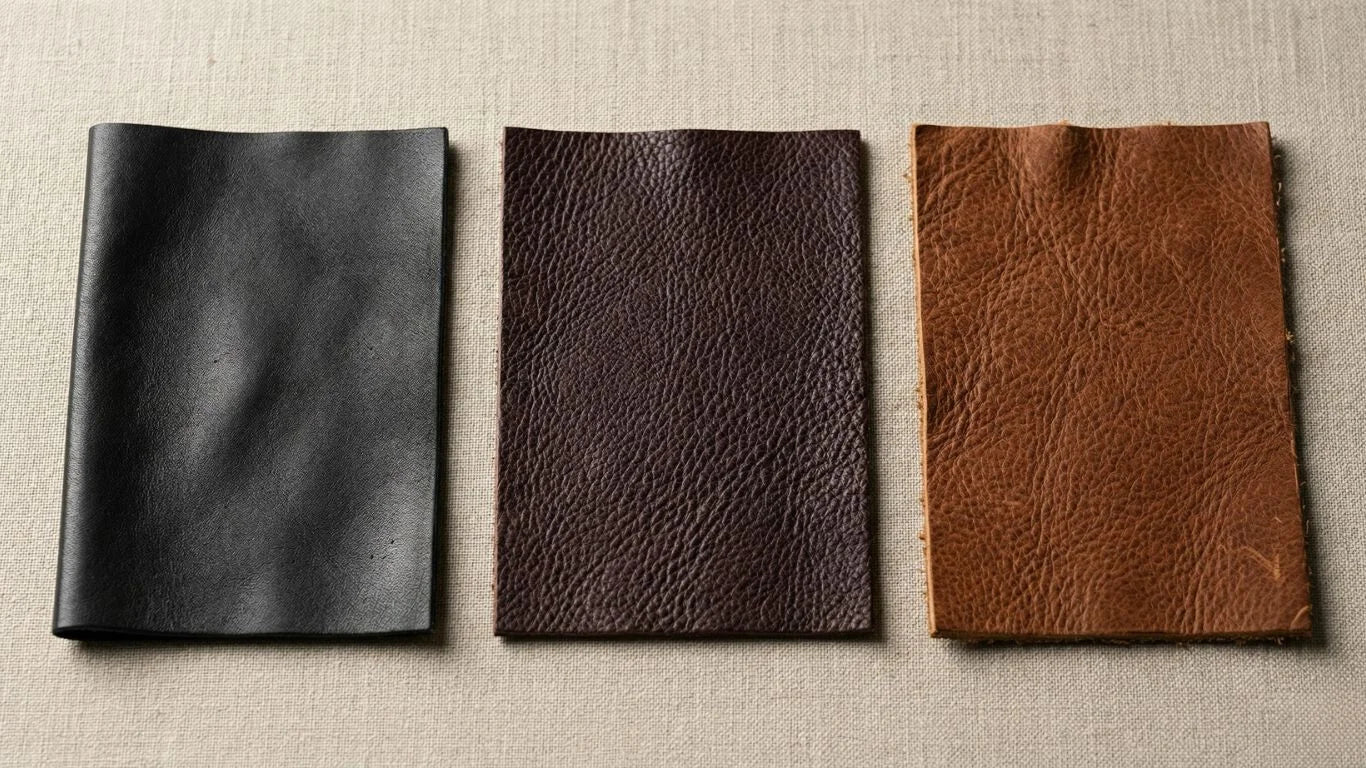
Suede and smooth leather offer completely different aesthetics, textures, and care requirements. Understanding the difference is the first step to choosing correctly.
Biker Jacket vs Bomber Jacket: Which is More Versatile?
The Sharp Silhouette
The biker jacket has an asymmetric zip, structured shoulders, and a fitted silhouette that creates a definite shape around the body. It is more assertive than the bomber, it makes a statement that the bomber does not. This sharpness is what makes it so versatile: the biker jacket can dress up casual outfits and dress down formal ones with equal effectiveness.
The biker jacket works across casual dressing, smart-casual, and even formal environments when paired with tailored trousers and a silk blouse. No other leather jacket style covers this range as convincingly.
The Effortless Silhouette
The bomber jacket has a clean zip front, ribbed hem and cuffs, and a relaxed silhouette that sits away from the body rather than defining it. It is less structured than the biker, which makes it more comfortable to wear casually but less effective in formal or smart settings.
The bomber's strength is its ease. It looks deliberately uncontrived in a way that more structured jackets cannot achieve. Worn over a midi dress, with wide-leg trousers, or with straight jeans and trainers, the bomber consistently delivers a relaxed, modern confidence.
If you want one leather jacket that works across the most occasions, choose the biker. If you already own a biker jacket and want a second leather piece with a completely different energy, the bomber is the natural complement. The two styles work better together than either does alone.
Leather Jacket vs Leather Coat: Which is the Better Investment?
The Daily Workhorse
A leather jacket ends at or just below the hip. Its shorter length means it integrates into virtually any outfit without dominating the silhouette. You can wear a leather jacket over a midi dress, with jeans, to the office, or on a weekend, it asks very little of the outfit beneath it while contributing a great deal.
The jacket is the more versatile piece across a wider range of daily situations. If you are building your leather wardrobe from the beginning, the jacket is always the correct starting point.
The Commanding Silhouette
A leather coat extends to mid-thigh or below the knee. Where a jacket integrates, a coat commands. Its length means it anchors the entire outfit, everything beneath it becomes secondary to the coat itself. This is its strength as a formal or evening piece.
A leather coat also provides significantly more warmth than a jacket, making it a more practical choice for colder climates and winter months. A leather trench coat or belted leather coat can function as a complete outer layer in ways a jacket cannot.
Buy the jacket first. It integrates into more of your existing outfits and works across more situations. The coat is the ideal second leather investment once you have a reliable jacket. Together they cover every leather occasion, from a Monday morning to a Saturday evening.
Full-Grain Leather vs Genuine Leather: The Honest Comparison
The Real Thing
Full-grain leather uses the complete outer surface of the hide. Nothing is sanded away, nothing is buffed out. The natural grain, the subtle markings, the variation in texture, all of it is retained. This is what gives full-grain leather its ability to develop a rich patina over time and last 20 to 40 years with proper care.
Full-grain leather breathes naturally, softens with wear, and becomes more personal and more beautiful with each year of use. It is the only leather grade that genuinely improves over time.
A Misleading Name
Despite the name, genuine leather is not a quality indicator, it is the industry term for the lowest usable grade of real leather. It is made from the inner layers of the hide after the full-grain and top-grain surfaces have been removed. These inner layers have none of the natural strength or breathability of the outer surface.
Genuine leather is heavily coated and painted to simulate quality. It looks acceptable when new. Within two to five years of regular wear, the coating cracks and peels. There is no way to repair it. The name is designed to sound reassuring. It should not be.
This is not a close comparison. Full-grain leather outperforms genuine leather in every measurable category. The only advantage genuine leather offers is a lower upfront price, which is offset by the fact that it needs replacing in a few years. Full-grain leather, bought once, costs far less over a decade than genuine leather replaced twice.

Full-grain leather develops richer character with every year of wear. Genuine leather deteriorates from the first signs of use. The grade you choose determines everything.
The Complete Comparison at a Glance
| Factor | Lambskin | Cowhide | Suede | Full-Grain | Genuine |
|---|---|---|---|---|---|
| Softness | Best | Good | Best | Varies | Poor |
| Durability | Moderate | Best | Moderate | Best | Poor |
| Weather resistance | Moderate | Good | Low | Good | Poor |
| Patina development | Yes | Yes | Partial | Best | None |
| Lifespan | 15-25 yrs | 20-40 yrs | 10-20 yrs | 20-40 yrs | 2-5 yrs |
| Care difficulty | Moderate | Easy | High | Moderate | Low |
| Best for | Biker jackets | Bombers, coats | Autumn pieces | All styles | Nothing |
The right leather for you is not the most expensive option or the softest option. It is the one that matches how you live, how you dress, and how much care you are willing to give it.
Final Thoughts
Every leather comparison comes down to the same underlying question: what role does this piece play in your wardrobe, and what does your lifestyle demand of it? There is no universally correct answer. A lambskin biker jacket is the right choice for one woman and entirely wrong for another. A suede coat is a deeply practical investment for someone who cares for it attentively and a frustrating mistake for someone who does not.
What never varies is the importance of leather grade. Full-grain or top-grain leather is always worth the investment. Genuine and bonded leather never are. Get the grade right, and everything else is a matter of preference. Read our complete leather quality guide, learn how to style a women's leather jacket and our best women's leather jackets buying guide to go deeper on both.

The definitive smooth leather biker jacket. Full-grain leather that softens and develops patina with every wear, the jacket that gets better with age.
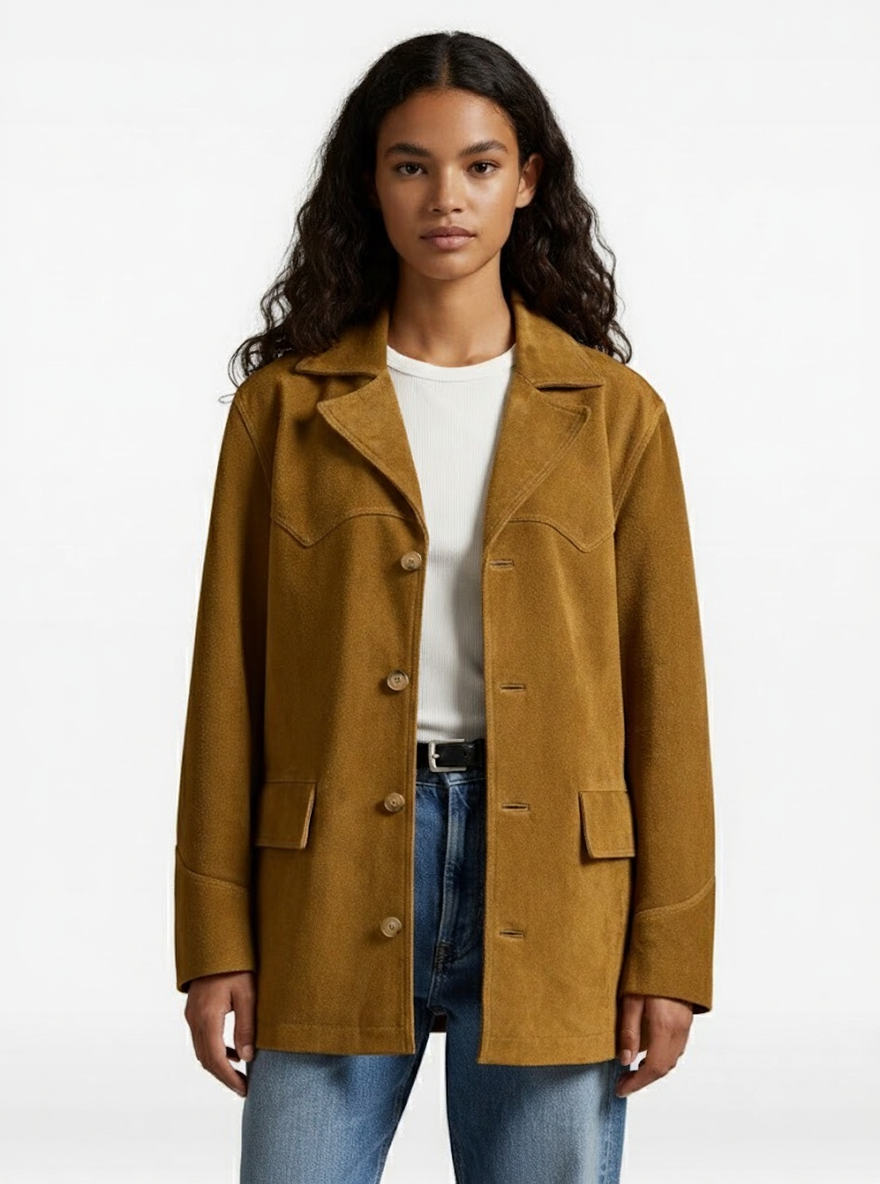
Premium suede leather in warm camel. The Marceau demonstrates exactly what suede does that smooth leather cannot, warmth of tone, softness of texture, richness of character.
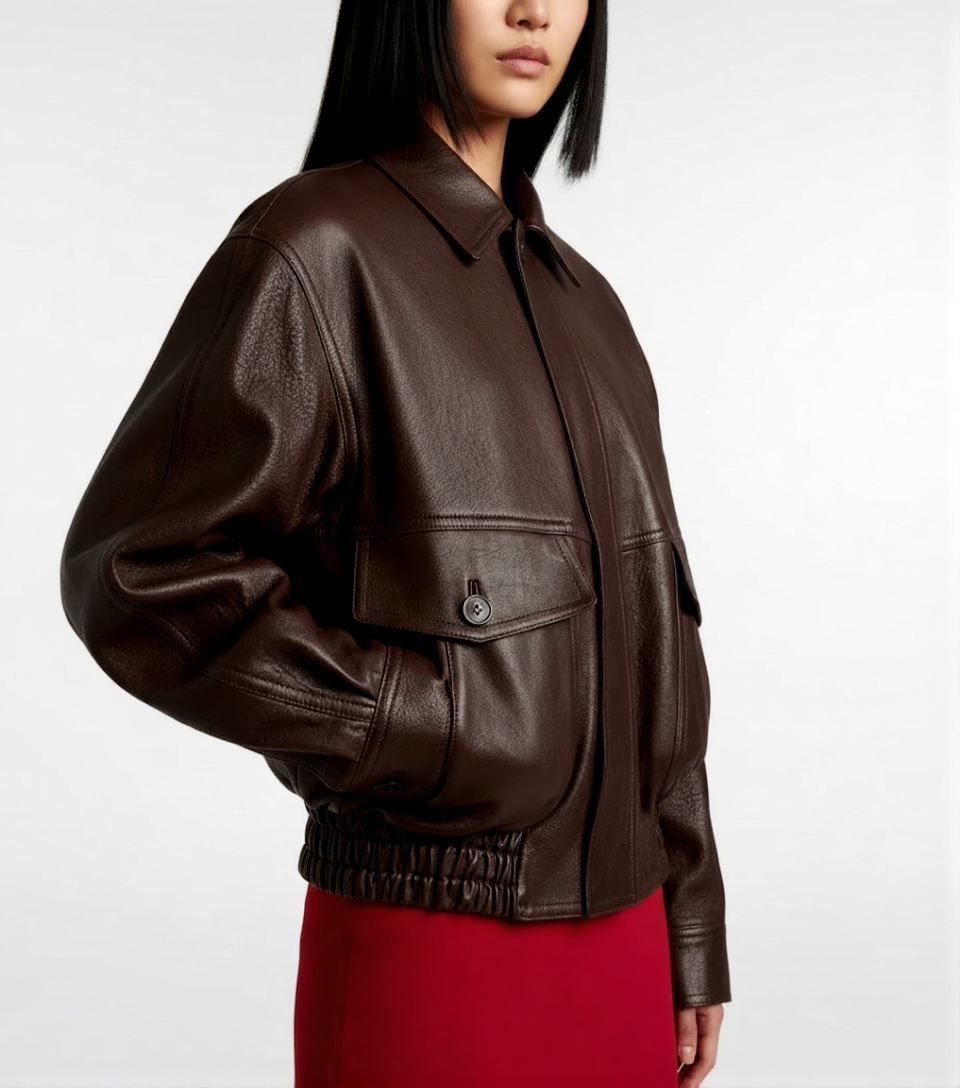
The biker versus the bomber, this is the bomber at its best. Dark brown leather, oversized silhouette, effortless in every situation it finds itself in.
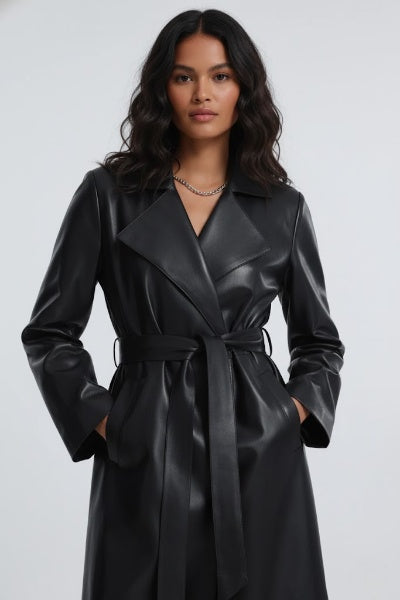
The jacket versus the coat, this is the coat argument made physical. The Onyx trench provides the coverage, warmth, and formal weight that no jacket can match.
Frequently Asked Questions
Lambskin is softer, lighter, and more luxurious, making it ideal for fitted biker jackets worn as fashion outerwear. Cowhide and nappa are more durable and weather-resistant, better suited to bombers, trench coats, and styles that need to hold a defined structure across years of wear. For most women buying a fashion leather jacket, lambskin or nappa is the better choice.
Buy smooth leather first. It is more versatile, easier to care for, and integrates into more outfits and weather conditions than suede. Once you have a smooth leather jacket as your foundation piece, suede is the ideal second leather investment. The two materials complement each other beautifully and together cover every leather occasion.
The biker jacket is more versatile. Its structured silhouette and asymmetric zip work across casual, smart-casual, and even formal settings in a way the bomber cannot. The bomber is more relaxed and more comfortable to wear casually, but it does not have the formal range of the biker. If you want one jacket that covers the most occasions, choose the biker.
A leather jacket ends at or just below the hip and is more versatile for daily wear. A leather coat extends to mid-thigh or below the knee, provides more warmth and coverage, and creates a more commanding, formal silhouette. The jacket integrates into outfits; the coat anchors them. Buy the jacket first, then the coat as a second leather investment.
Genuine leather is technically made from real leather, but it is the lowest quality grade of real leather available. It is made from the inner layers of the hide after the higher quality surfaces have been removed. Despite the name, it is not a quality designation. Full-grain and top-grain leather are the grades worth buying. Genuine leather typically begins peeling within 2 to 5 years of regular use.
Full-grain cowhide lasts the longest of any leather type, typically 20 to 40 years with proper care. Full-grain lambskin lasts 15 to 25 years. Top-grain leather lasts 10 to 20 years. Suede lasts 10 to 20 years with attentive care. Genuine leather lasts 2 to 5 years. Bonded leather lasts under 2 years. The grade of leather is the single biggest factor in longevity.
Shop Quality Leather at Aurox
Every piece at Aurox uses full-grain or top-grain leather. No genuine leather. No bonded leather. Just quality that improves with every year of wear.


