

What Is Full-Grain Leather? Types, Quality & Care | Aurox The Label
What Is Full-Grain Leather? A Complete Guide to Leather Types, Quality and Care
Full-grain, top-grain, genuine, bonded, lambskin, suede, patina, care. Everything you need to know about leather before buying a leather jacket.
Full-grain leather is one of the oldest and most durable materials available to us. It has been used for clothing for thousands of years, and in that time the fundamental qualities that make it exceptional have not changed. What has changed is the market around it, a market that now contains an enormous range of quality levels, from hides that will last forty years to bonded composites that begin peeling within eighteen months. Understanding the difference is the most valuable thing you can do before spending a penny.
This guide covers everything you need to know about leather as a material. Not marketing language. Not brand positioning. Just an honest account of how leather is made, what separates good from poor quality, how it changes over time, and how to care for a piece you intend to keep for decades.
The Four Main Types of Leather: Full-Grain, Top-Grain, Genuine and Bonded
All leather starts from the same place, an animal hide. What separates the grades from each other is how much of that hide is used, and how heavily it is processed. The less processing, the more natural character is retained. The more processing, the more the manufacturer is compensating for a lower-quality starting material.
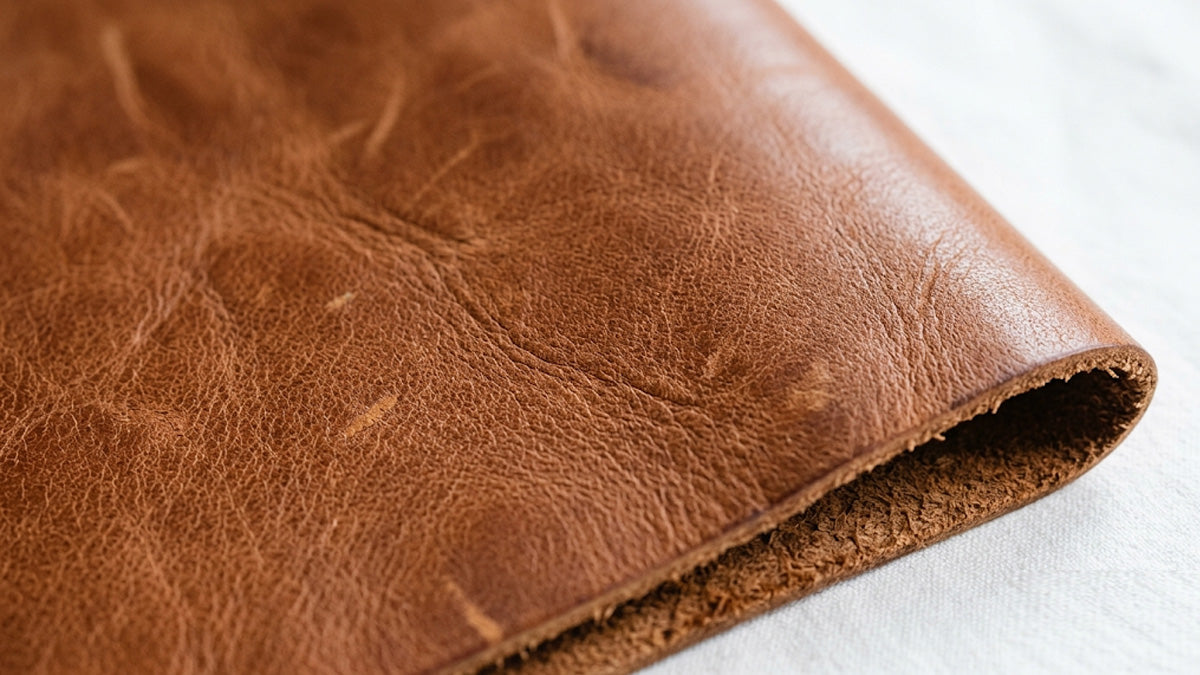
Full-grain is the highest grade of leather available. It uses the complete outer surface of the hide, nothing is sanded, buffed, or removed. The natural grain pattern, the subtle variations in texture, the occasional marking left by the animal's life, all of it is retained. This is not a flaw in full-grain leather. It is the point.
Because the full grain is intact, the leather breathes naturally, absorbs conditioner effectively, and develops a patina over time that makes it richer and more beautiful with each year of use. A full-grain leather jacket bought today, cared for properly, will be a better jacket in twenty years than it was the day you purchased it. No other material behaves this way.
Full-grain leather is the only grade that genuinely improves with wear. The oils from your skin condition it. The creases that develop follow your movement. The colour deepens in the areas that catch the light. This process is called patina, and it is the reason leather collectors and enthusiasts will pay significant premiums for aged, well-worn full-grain pieces.
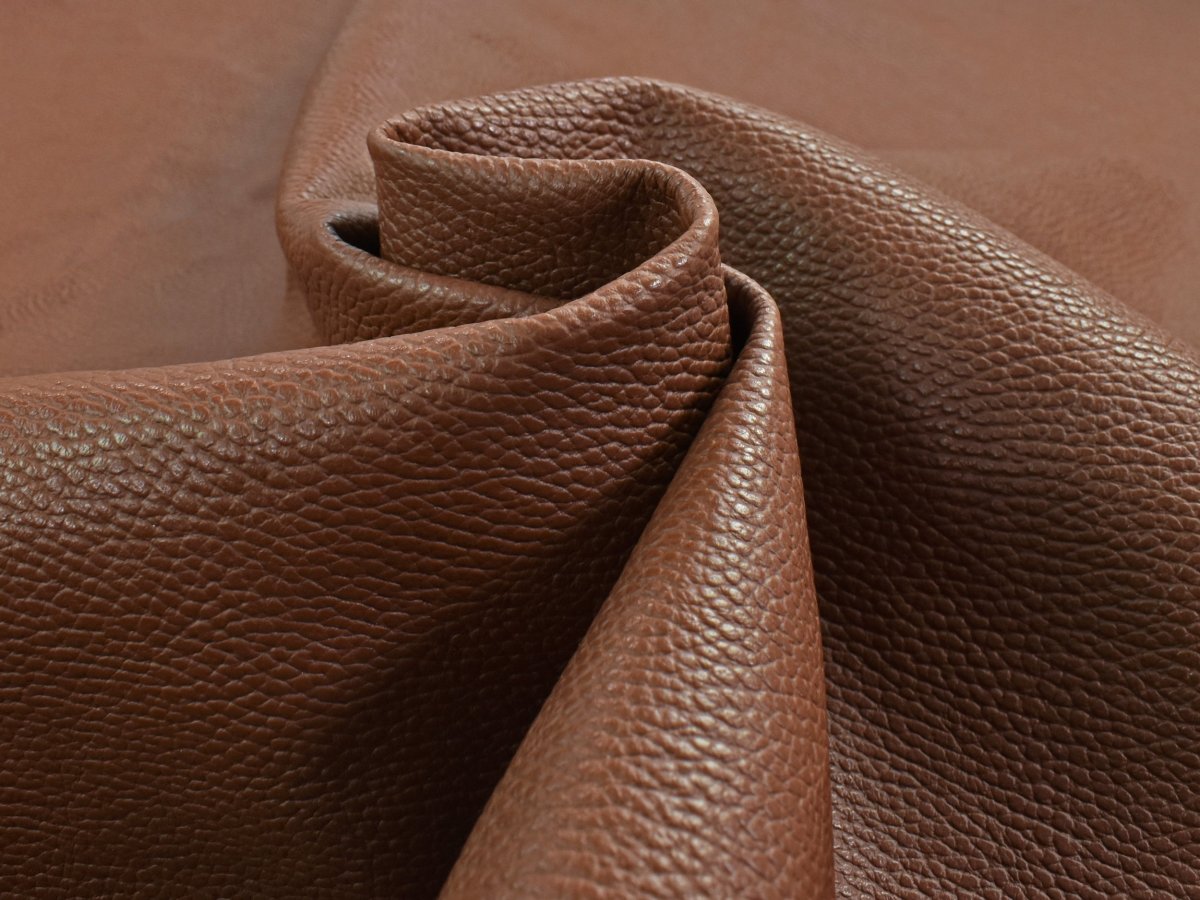
Top-grain leather is the second highest grade. The outer surface of the hide is lightly sanded to remove natural imperfections and blemishes, then a uniform finish coat is applied to create a consistent appearance. The result is a smoother, more even leather than full-grain, but one that has had some of its natural character removed in the process.
Top-grain leather is still excellent quality. It is softer and more pliable than full-grain at the point of purchase, ages well, and will last many years with proper care. Many premium leather jackets use top-grain hides. The main difference from full-grain is that the patina development is less pronounced, the leather will not develop the same depth of character over time, but it will remain beautiful and functional for ten to twenty years.
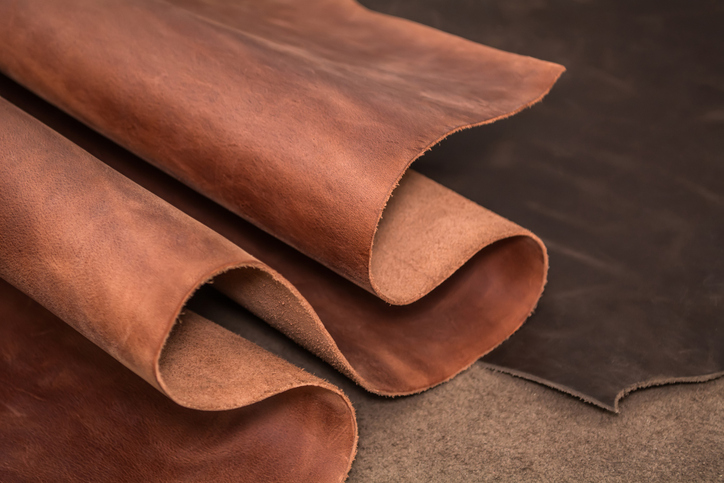
The name is deliberately misleading. "Genuine leather" sounds like a mark of quality. It is not. It is the industry term for the lower layers of the hide, the parts left over after the full-grain and top-grain surfaces have been removed. These inner layers have none of the natural strength or breathability of the outer surface. They are heavily processed, heavily coated, and heavily painted to simulate the appearance of quality leather.
Genuine leather will look acceptable when new. Within two to five years of regular use, the coating begins to crack and peel. The underlying material has no ability to develop a patina, it simply deteriorates. A garment made from genuine leather is not an investment. It is a purchase you will repeat in a few years.
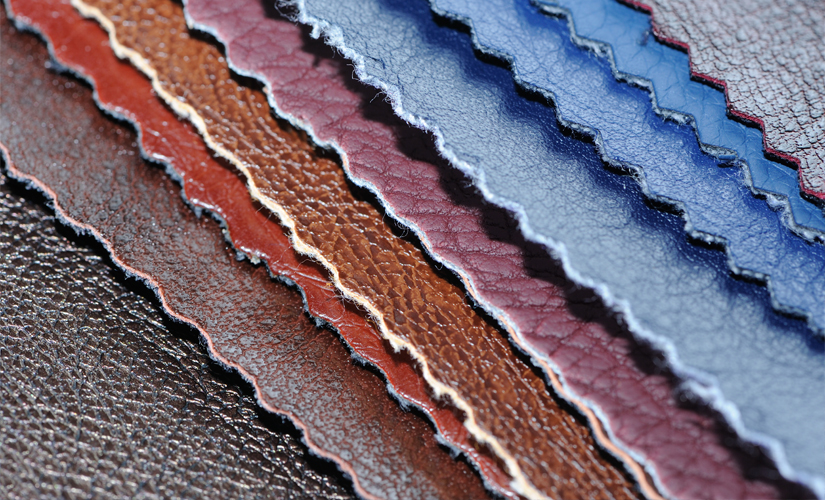
Bonded leather is not leather in any meaningful sense. It is a composite material made from leather scraps and fibres, the offcuts and waste from leather production, ground down and bonded together with polyurethane adhesive, then coated and embossed to resemble leather. Typically it contains between ten and twenty percent leather fibres by composition.
Bonded leather looks convincing on a hanger. It begins to fail quickly under use. The polyurethane coating peels away from the backing within one to two years, particularly at flex points, elbows, shoulders, collar. Once peeling begins, it cannot be repaired. The piece is finished. Bonded leather products are not an economy, they are a false saving.
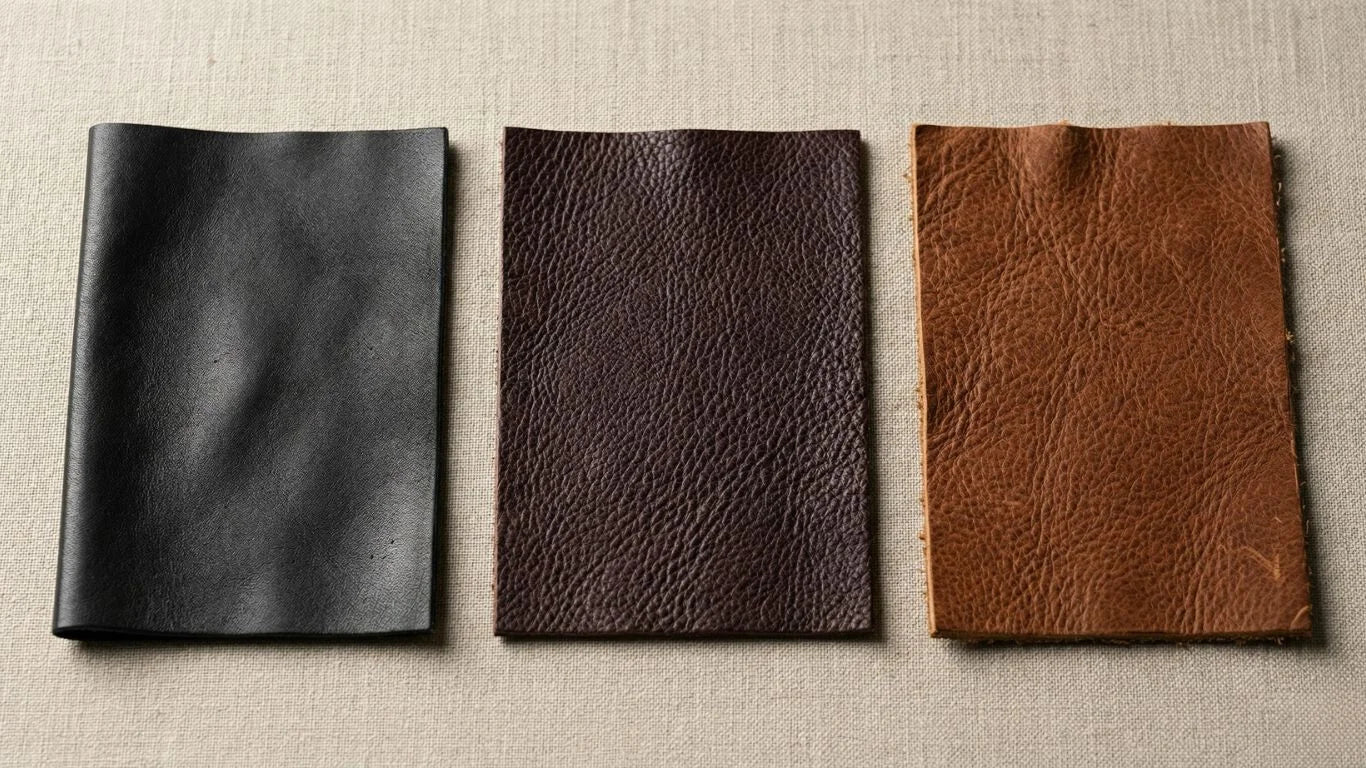
Lambskin, cowhide, and suede each offer different textures, weights, and characteristics suited to different styles and occasions.
Lambskin vs Cowhide vs Suede: Which Leather Hide is Best for a Jacket?
The grade of leather tells you how much of the hide was used. The type of hide tells you the texture, weight, and character of the final material. The two most common hides used in women's leather outerwear are lambskin and cowhide, with suede as a distinct finishing option applied to either.
Lambskin
Lambskin is the softest and most supple leather available in outerwear. It is lightweight, drapes beautifully, and has an almost silky texture against the skin. These qualities make it the preferred choice for fitted biker jackets and tailored leather pieces, the softness allows the garment to move with the body rather than against it.
The trade-off is durability. Lambskin is more susceptible to scratches, punctures, and abrasion than cowhide. It requires more careful handling and more regular conditioning. For a jacket worn as fashion outerwear rather than protective gear, this is rarely a practical concern. For those who want the softest, most luxurious feel in a leather jacket, lambskin is the answer.
Cowhide
Cowhide is thicker, heavier, and more resistant to abrasion than lambskin. It holds its shape exceptionally well, making it ideal for structured silhouettes, bomber jackets, trench coats, and belted styles that need to maintain their form across years of wear. Cowhide is also more resistant to weather and moisture, making it a practical choice for outerwear that sees regular outdoor use.
Nappa is a refined, softened form of cowhide, processed to remove much of the stiffness while retaining the durability. It sits between lambskin and standard cowhide in terms of feel, and is the most commonly used hide in premium women's leather outerwear.
Suede
Suede is not a different animal, it is a different surface. Suede is produced by buffing the inner surface of the hide to create a soft, napped finish. It can be produced from lambskin, cowhide, or other hides. The result is a warmer, more matte texture than smooth leather, with a tactile quality that smooth leather cannot replicate.
Suede is more absorbent than smooth leather, which makes it more vulnerable to water and staining. It requires waterproofing spray and more careful storage. In return, it offers an aesthetic richness that many women find more versatile across autumn and winter wardrobes than smooth leather.
If you are buying your first leather piece, choose smooth lambskin or nappa cowhide. Both are forgiving to care for and pair with the widest range of outfits. Suede is the ideal second leather investment once you have established how you wear and care for leather.
What Is Leather Patina and Why Does It Matter?
Patina is the gradual change in the surface appearance of full-grain leather over time. It is not damage. It is not wear. It is the material responding to its environment, absorbing natural oils, darkening in areas of regular contact, lightening where light catches it consistently, developing a depth and character that cannot be replicated artificially.
A leather jacket at ten years is more beautiful than a leather jacket at ten days. No other material in fashion can make that claim.
The patina develops differently depending on how the jacket is worn and stored. A jacket worn frequently and stored on a hanger will develop a rich, even patina. A jacket stored in a bag, rarely worn, will age more slowly and less attractively. The single best thing you can do for a quality leather jacket is wear it.
| Time | What Changes | What to Do |
|---|---|---|
| 0 to 3 months | Leather softens and begins to mould to your body shape. Stiffness reduces with each wear. | Wear regularly. Condition once after purchase. |
| 3 to 12 months | Natural oils from skin begin to condition the leather. Subtle darkening at contact points. | Continue wearing. Condition every 3 to 4 months. |
| 1 to 3 years | Patina becomes visible. Colour deepens at elbows, collar, and cuffs. Character develops. | Condition twice yearly. Buff gently with a soft cloth. |
| 3 to 10 years | Rich patina throughout. Leather has fully moulded to your silhouette. Unique to you. | Condition twice yearly. Store on wide hanger off-season. |
| 10 years plus | Deep, complex patina. A well-worn full-grain jacket at this age is genuinely irreplaceable. | Continue regular conditioning. Professional clean if needed. |
How to Care for a Leather Jacket: The Complete Routine
Leather care is simpler than most people assume. A quality leather piece does not need constant attention. It needs the right attention, applied correctly, at the right intervals. The five-step routine below is everything you need.
Use a dedicated leather conditioner, not shoe polish, not Vaseline, not coconut oil. Apply a small amount to a clean soft cloth and work it into the leather in circular motions. Allow to absorb for 30 minutes, then buff away any excess with a dry cloth. Conditioning replaces the natural oils that evaporate over time and prevents cracking at flex points.
Leather has a memory. Fold it and it will crease permanently. Store your jacket on a wide, padded wooden hanger that supports the full shoulder width. Never hang it on a wire hanger, the thin frame will distort the shoulder shape over time. Never store it compressed in a bag or drawer. Give it space, and it will hold its shape indefinitely.
If your jacket gets wet in rain, shake off the excess water and allow it to dry at room temperature, away from radiators, heaters, and direct sunlight. Heat strips the natural oils from leather and causes surface cracking. Once fully dry, apply a light coat of conditioner to restore any oils lost during the drying process. Do not attempt to speed the drying process with any heat source.
For light surface dirt, wipe with a barely damp cloth and allow to air dry naturally. For more stubborn marks, use a dedicated leather cleaning solution applied sparingly to a soft cloth, never directly to the leather. Work gently in circular motions and allow to dry fully before conditioning. Never use household cleaning products, detergents, or alcohol-based cleaners on leather.
This is the most overlooked aspect of leather care. The natural oils from your skin condition the leather every time you wear it. A jacket worn regularly develops a richer patina, stays supple longer, and ages more beautifully than one stored for months at a time. If you own a quality leather piece, the best thing you can do for it is wear it.
Never dry clean a leather jacket. The chemicals used in dry cleaning strip the natural oils from the leather irreversibly. Never put it in a washing machine or tumble dryer. Never expose it to prolonged direct sunlight when storing. Never apply heat to dry it after it gets wet. These mistakes cause permanent damage that cannot be reversed by conditioning.
How to Care for a Suede Leather Jacket
Suede requires a few additional steps beyond the routine above. Before first wear, apply a suede protector spray to create a barrier against water and staining. Use a suede brush with soft brass or nylon bristles to restore the nap after each wear, always brush in one direction. For dry stains, a suede eraser will lift surface marks without damaging the nap. For wet stains, blot immediately with a clean cloth, allow to dry naturally, then brush gently to restore the texture.
How to Tell If Leather Is Good Quality Before You Buy
The ability to identify leather quality quickly and accurately is worth more than any review or recommendation. Run through these four checks before purchasing any leather piece.
The Touch Test
Bend the leather gently between your fingers. Quality leather is supple and moves with natural resistance. It returns to its original shape smoothly. Poor-quality leather or bonded leather will feel stiff, papery, or slightly plasticky. If it crackles when bent, walk away.
The Smell Test
Full-grain and top-grain leather have a distinctive, slightly earthy smell that is immediately recognisable. It is not chemical, not synthetic, not sharp. Genuine and bonded leather smell of chemicals, the processing and coating agents used to simulate quality. Trust your nose. It is a reliable quality indicator.
The Edge Test
Look at the cut edges of the leather, visible at cuffs, collar, and pocket openings. A clean, solid edge indicates quality full-grain or top-grain leather. A rough, fibrous, or peeling edge indicates genuine or bonded leather. The edge reveals what the surface coating conceals.
The Reverse Test
Where possible, look at the back surface of the leather. Full-grain leather has a smooth, fibrous backing. Top-grain leather has a uniform, slightly fuzzy backing. Bonded leather has a backing that looks like compressed fibres or felt, because that is exactly what it is.
Final Thoughts
Leather at its best is one of the most remarkable materials available in fashion. It is durable, beautiful, sustainable in its use of byproduct hides, and genuinely improves over time in ways that no synthetic material can replicate. The challenge is not finding leather. The challenge is finding the right leather, the grade and hide that will reward the investment over years rather than disappoint within months.
At Aurox The Label, every piece in our collection uses full-grain or top-grain leather, selected for its quality and longevity. We do not use genuine or bonded leather. The difference is in the feel from the first moment you hold the jacket, and in every moment of wear across the years that follow. Ready to invest in a quality piece? Browse our best women's leather jackets buying guide or learn how to style a women's leather jacket for every occasion.

Premium leather that will develop a richer patina with every wear. The Noir is the jacket that gets better with age, structured at purchase, moulded to you within months.
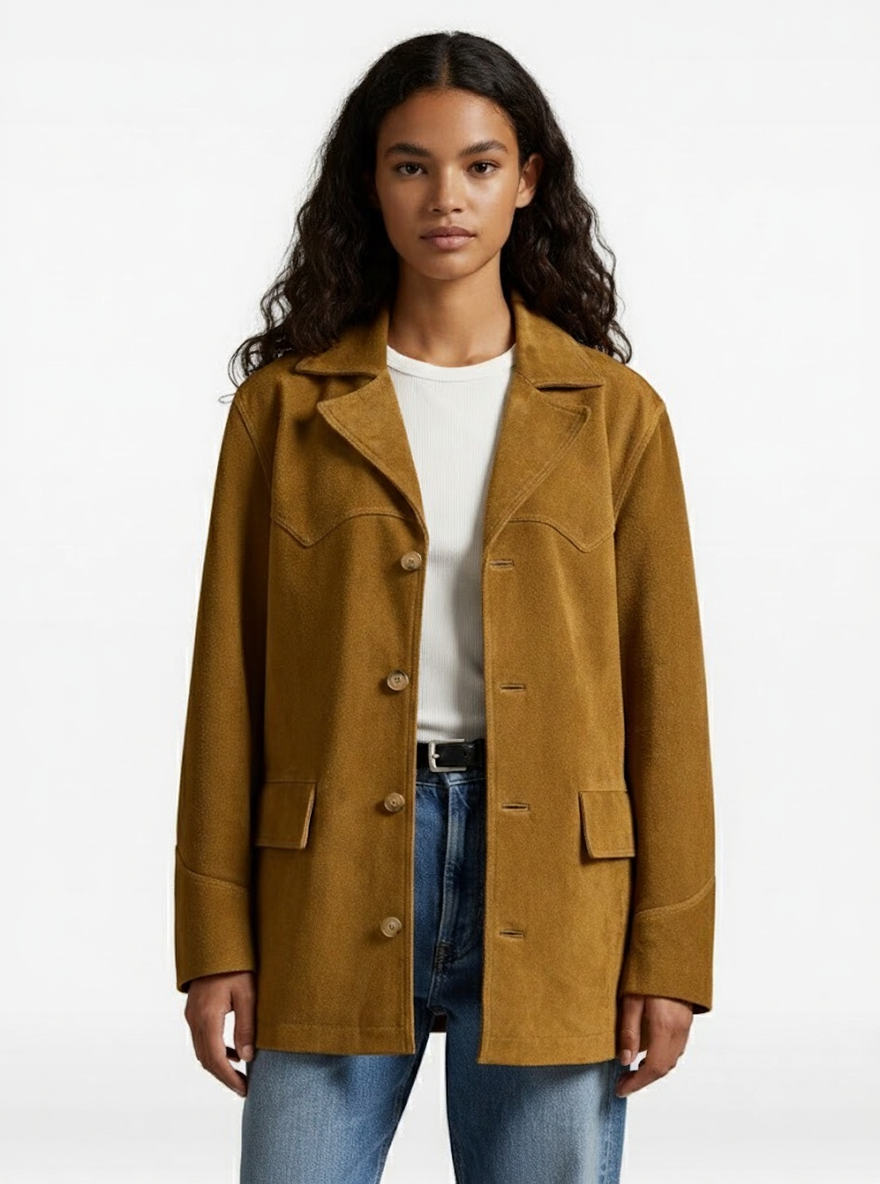
Suede at its finest. The Marceau demonstrates exactly why suede leather rewards proper care, the texture deepens, the colour enriches, and the jacket becomes uniquely yours over time.
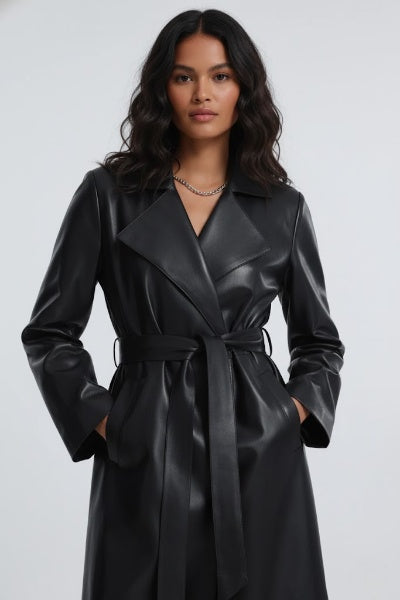
The Onyx trench coat is the clearest argument for investing in quality leather. A longline silhouette in premium black leather that will still be exceptional in twenty years.
Frequently Asked Questions
Full-grain leather uses the complete outer surface of the hide with nothing removed. It breathes naturally, develops a rich patina over time, and lasts 20 to 40 years. Genuine leather uses the lower layers of the hide, heavily processed and coated to simulate quality. It typically begins peeling within 2 to 5 years. Despite the name, genuine leather is a lower grade, not a quality indicator.
Twice a year is sufficient for most leather jackets worn regularly. Condition once at the start of the season when you begin wearing it, and once at the end when you store it. If the jacket gets heavily wet, apply conditioner once it has dried naturally. Over-conditioning can soften the leather excessively and cause it to lose its structure.
Patina is the gradual deepening and enrichment of the leather surface that develops through regular wear. It is highly desirable. A well-developed patina means the leather has absorbed natural oils, moulded to the wearer's body, and developed a depth of colour and texture that cannot be replicated artificially. It is the primary reason full-grain leather pieces increase in character over time rather than simply wearing out.
Full-grain leather is naturally water-resistant and handles light rain well. If it gets significantly wet, shake off the excess and allow it to dry at room temperature away from any heat source. Heat causes the leather to dry too quickly, which strips its natural oils and leads to cracking. Once fully dry, apply a light coat of conditioner to restore any oils lost during the drying process.
Lambskin is softer, lighter, and more luxurious against the skin. It is ideal for fitted biker jackets and pieces worn as fashion outerwear. Cowhide and nappa are more durable, hold their structure better, and are more resistant to abrasion and weather. For a first leather jacket worn primarily for style, lambskin or nappa is the better choice. For heavy outdoor use, cowhide is more practical.
Apply a suede protector spray before first wear and reapply every few months. Use a suede brush with soft brass or nylon bristles to restore the nap after wearing. For dry marks, use a suede eraser. For wet marks, blot immediately and allow to dry naturally before brushing. Never use smooth leather conditioner on suede as it will flatten the nap permanently.
A full-grain leather jacket that is worn regularly and cared for correctly will last 20 to 40 years. Top-grain leather lasts 10 to 20 years. The grade of leather is the single biggest factor in longevity. A quality leather jacket is one of the few fashion purchases that genuinely becomes more valuable with time rather than depreciating.
Invest in Quality Leather
Every piece at Aurox The Label uses premium leather selected for its quality, longevity, and ability to improve with age.


